How to transform your school into a gamified school
Discover the step-by-step process to implement gamification in your school and increase student engagement without relying on cell phones.
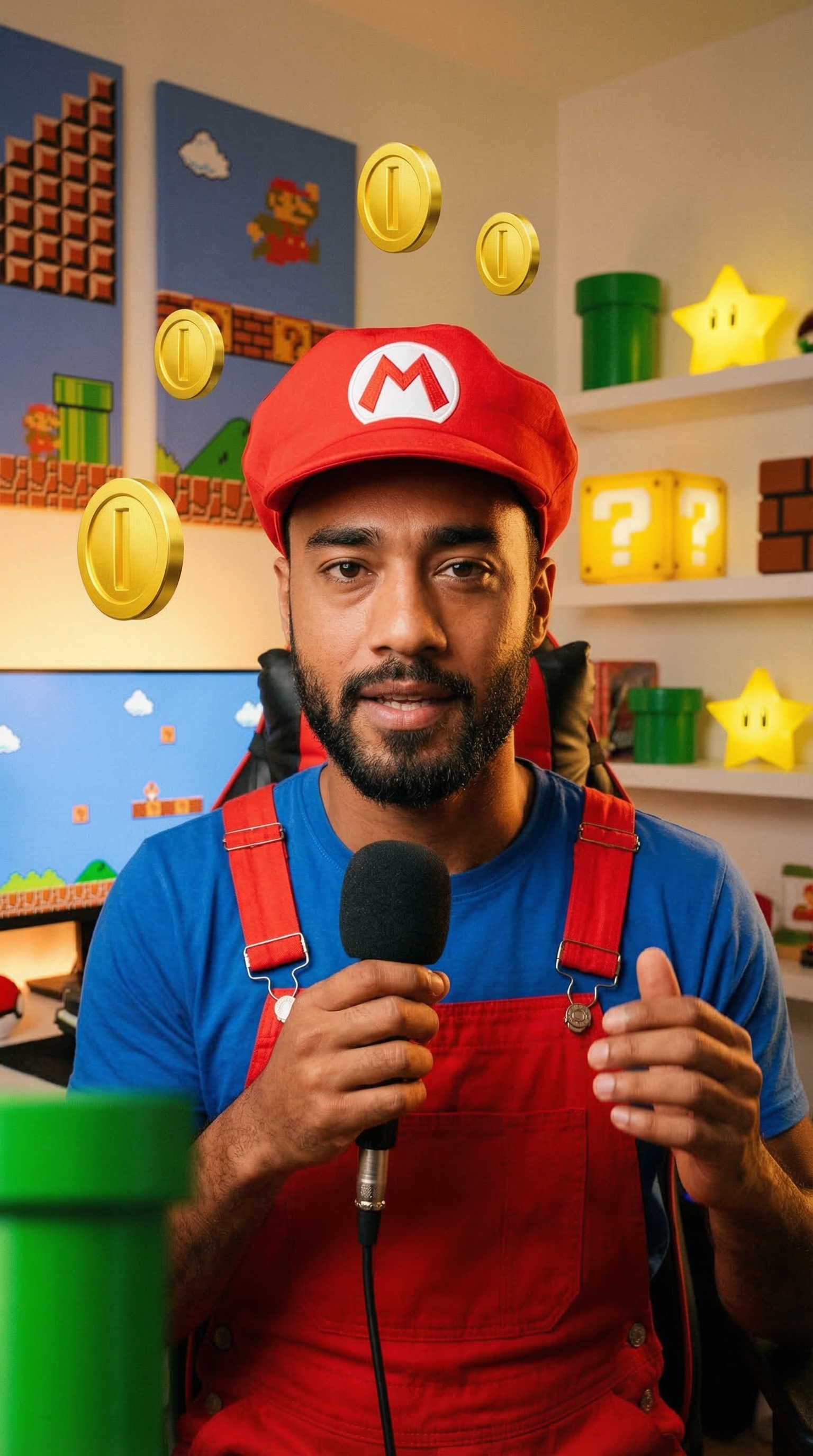

How to transform your school into a gamified school
If you have ever wondered why, even with good teachers and good classes, students remain apathetic, distracted, or just "present in body" — you are not alone. Principals and coordinators all over Brazil face this same challenge: how to reignite students' interest in a world full of digital stimuli and competition for attention?
The good news is that there is a concrete answer to that. It is not a magic solution, nor a passing trend. It is a systemic transformation that redefines how the school works — from student motivation to how teachers plan and measure their results.
In this article, you will learn what a gamified school is, why it works, what the practical steps are to implement this transformation, and how technology — especially artificial intelligence — can accelerate and sustain these results. If you are a school manager and are looking for real change, this is your guide.
Why the traditional school model is not working
The data is concerning. According to the PISA 2022 report, Brazil still shows scores below the average of OECD countries in reading, mathematics, and sciences — but the problem is not just in performance. It is in engagement.
Recent research indicates that more than 60% of high school students in Brazil report feeling disengaged with what they learn at school. In the final years of elementary school, this number also grows alarmingly starting from the 6th year, precisely when the transition to a more content-based model tends to push students away.
Meanwhile, the world around students has become completely gamified: apps with reward systems, challenges in series and games, friend rankings on social networks. The contrast with the classroom — static, linear, based on grades and fear of failing — has never been so glaring.
The result? Students who fulfill obligations, but do not engage. Demotivated teachers in classes that do not respond. Managers who notice that grades may even improve, but real learning falls by the wayside.
This is where the gamified school comes in.
What is a gamified school?
A gamified school is an educational institution that applies the principles and mechanics of games — missions, rewards, progression, challenges, and recognition — systematically throughout the educational experience, from pedagogical planning to student engagement.
Unlike simply "using games in the classroom," the gamified school transforms the logic of the school environment. Students stop being passive receivers and become protagonists of a learning journey: they accumulate points, level up, complete pedagogical missions, and are recognized for their achievements — both academic and in behavior and socio-emotional skills.
This transformation does not depend on mobile phones or screen time. It depends on method, structure, and increasingly, technology designed for the school environment.
The gamified school is not an isolated project of an enthusiastic teacher. It is an institutional decision that involves management, teaching staff, and families — and, when well implemented, transforms the school's indicators in a lasting way.
Practical examples of gamified schools in Brazil and around the world
Theory is convincing, but what convinces school managers the most are real examples. See how gamification is being applied:
1. System of pedagogical missions by subject Instead of "take the test and get a grade", students receive weekly missions: "Solve 5 math challenges and earn 100 Logic Explorer points." Each mission has clear completion criteria and immediate rewards — digital or physical.
2. Class rankings (not student rankings) To stimulate cooperation instead of individual competition, many gamified schools create rankings by class. The 7th A class accumulates collective points when the average activity submission exceeds 80%. This strengthens group identity and collective engagement.
3. Badges for specific achievements A student who has never been absent for 30 days receives the badge "Unwavering Presence". Another who helped 3 classmates in difficulty receives "Class Mentor". These achievements are recorded on the student’s digital profile and build a positive identity within the school.
4. Reward store with real partners Some schools partner with stores where students exchange accumulated points for tangible rewards — from school supplies to special experiences like technical visits or themed days. With partnerships like those offered by Gamefik, this system becomes scalable and sustainable.
5. Protagonism missions outside the classroom Gamification does not need to be limited to subjects. A mission might be: "Organize an event for 50 people at the school" or "Create a social action project with your class." This expands the concept of learning and engages students that the traditional model leaves behind.
Step by step: how to transform your school into a gamified school
Transforming a school is a process — not a switch to turn on. But it can start in a structured way, in stages, without needing to change everything at once.
Step 1: Diagnosis and mapping Before implementing any system, understand the current situation of your school:
Which classes have the highest disengagement rates?
Which teachers are already experimenting with motivation dynamics?
What do students value as recognition?
This diagnosis defines where to start and what metrics to follow.
Step 2: Define the gamification structure Choose the elements that will be part of your school’s system:
Points: how they are accumulated, for which actions (academic, behavioral, socio-emotional)
Missions: who creates them, how often, in which subjects
Rewards: what students can achieve with points
Progression: is there a level system or just accumulated points?
Step 3: Involve the teachers before involving the students The success of the gamified school depends on the teaching staff. Conduct practical workshops showing how to create pedagogical missions within the curriculum — not as an addition, but as a different way to plan what already needs to be taught.
Step 4: Launch with a pilot class It is not necessary to gamify the whole school at once. Choose one or two classes, apply the system for 30 days, and measure the results: attendance, assignment submission, class participation. The data will show the way and create internal history to convince other teachers.
Step 5: Scale with technology Managing points, missions, and rewards for hundreds of students manually is unfeasible. This is where an educational gamification platform becomes essential — it automates control, provides real-time visibility for managers and teachers, and creates a consistent experience for students.
Step 6: Communicate with families The gamified school works best when families understand and support the system. Explain the logic of the missions, show how their children are progressing, and involve parents in recognizing achievements.
How AI enhances the gamified school
Gamification alone already transforms engagement. But when combined with artificial intelligence, the results multiply — and the teacher's work becomes smarter.
AI for creating pedagogical missions Instead of the teacher spending hours creating activities from scratch, AI can generate missions aligned with the curriculum, the class level, and the pedagogical goal for each week. The teacher reviews, adjusts, and publishes — in minutes.
AI for analyzing learning evidence When a student submits an assignment, AI can automatically analyze the evidence — checking if the mission criteria have been met — and suggest feedback to the teacher. This reduces correction time and increases the quality of feedback given to the student.
AI for identifying dropout risk Patterns such as drops in submission frequency, repeated absences, or declines in engagement can be detected by AI before they become dropout. The manager receives alerts and can act preventively.
AI for personalizing the learning path With sufficient data, AI can suggest missions with difficulty levels adjusted for each student — respecting each one's pace without overloading the teacher with individual planning.
How Gamefik transforms your school into a gamified school
Gamefik is an educational gamification SaaS platform with AI, designed to transform schools into gamified educational experiences — without relying on mobile phones and without increasing students' screen time.
With over 10 years of experience in gamification applied to Brazilian education, Gamefik offers:
Complete system of pedagogical missions created with the help of AI, aligned with the curriculum
Platform for points, rewards, and rankings managed by the manager and teachers
More than 50 partner brands for a real and motivating rewards system
Automatic analysis of evidence of learning with AI
Fast implementation, without the need for technical infrastructure — it's a ready-to-use SaaS
Management dashboard with real-time visibility over engagement, attendance, and performance
Schools that implement Gamefik report a consistent increase in student engagement, reduction of disruptive behaviors, and improvement in the relationship between teachers and students.
Conclusion
Transforming a school into a gamified school is not a technology project — it is a leadership decision. It is the choice to acknowledge that the current teaching model can no longer engage today's students, and that there is a concrete, tested, and scalable way to change that.
The path begins with diagnosis, goes through structuring missions and rewards, involves teachers as protagonists, and is sustained with technology that automates and artificial intelligence that personalizes.
Your school can be the next to transform the learning experience into something students want to live — every day.


Start engaging your students today
Join thousands of educators who have already transformed their classrooms
" height="17.037561343628045px" id="GtA0zVHs6" transform="translate(30 6)" width="72.11297378391524px"/><path d="M 110.225 6.685 L 113.343 6.685 L 113.343 9.417 L 110.316 9.417 L 110.316 18.66 L 106.791 18.66 L 106.791 9.417 L 104.915 9.417 L 104.915 6.685 L 106.791 6.685 L 106.791 6.139 C 106.729 4.909 107.174 3.707 108.022 2.815 C 108.964 1.951 110.216 1.508 111.491 1.585 C 111.997 1.583 112.502 1.64 112.994 1.756 C 113.415 1.847 113.816 2.013 114.18 2.246 L 113.253 4.817 C 112.836 4.526 112.338 4.374 111.829 4.385 C 110.76 4.385 110.225 4.976 110.225 6.16 Z M 117.094 4.135 C 116.704 3.769 116.483 3.258 116.484 2.723 C 116.485 2.189 116.705 1.678 117.094 1.312 C 117.527 0.923 118.095 0.718 118.677 0.742 C 119.254 0.717 119.819 0.913 120.258 1.289 C 120.656 1.63 120.88 2.131 120.869 2.655 C 120.884 3.209 120.662 3.744 120.258 4.124 C 119.829 4.519 119.26 4.728 118.677 4.704 C 118.095 4.728 117.527 4.524 117.094 4.135 Z M 116.914 6.412 L 120.439 6.412 L 120.439 18.66 L 116.914 18.66 Z M 130.83 13.858 L 129.135 15.542 L 129.135 18.662 L 125.61 18.662 L 125.61 1.767 L 129.135 1.767 L 129.135 11.327 L 134.288 6.411 L 138.492 6.411 L 133.429 11.603 L 138.942 18.66 L 134.673 18.66 L 130.83 13.857 Z M 22.841 6.853 C 22.691 7.593 22.415 8.303 22.024 8.948 C 21.504 9.806 20.787 10.529 19.934 11.058 C 19.864 11.106 19.794 11.145 19.734 11.181 C 19.622 11.246 19.508 11.309 19.392 11.368 C 19.41 11.578 19.422 11.788 19.422 11.998 C 19.423 16.096 16.101 19.418 12.003 19.419 C 7.905 19.42 4.583 16.098 4.582 12 C 4.582 7.902 7.903 4.58 12.001 4.579 L 12.001 0 C 6.659 0 1.961 3.531 0.475 8.662 C -1.011 13.793 1.073 19.289 5.589 22.143 C 10.104 24.998 15.962 24.524 19.96 20.981 C 23.958 17.438 25.132 11.679 22.841 6.853 Z" fill="rgb(85, 252, 185)" height="24.00010563366923px" id="pKdvJIpGn" width="138.94212268066408px"/><path d="M 5.855 6.769 C 6.065 6.393 6.213 5.985 6.291 5.561 C 6.539 5.448 6.779 5.318 7.01 5.174 C 7.791 4.691 8.447 4.029 8.924 3.244 C 9.414 2.44 9.705 1.531 9.773 0.592 C 8.078 -0.231 6.092 -0.194 4.429 0.692 C 4.365 0.722 4.305 0.758 4.244 0.792 C 4.063 0.897 3.888 1.01 3.719 1.132 C 3.301 0.986 2.862 0.911 2.419 0.91 L 2.413 0.912 C 1.536 0.913 0.685 1.211 0 1.758 C 0.134 1.818 0.267 1.881 0.394 1.952 C 2.019 2.806 3.215 4.298 3.695 6.07 C 3.868 6.708 3.942 7.37 3.913 8.03 C 3.91 8.183 3.899 8.335 3.88 8.486 C 4.713 8.158 5.408 7.553 5.847 6.772 M 6.103 2.719 C 5.936 2.443 5.931 2.098 6.09 1.817 C 6.25 1.536 6.548 1.363 6.871 1.365 C 7.194 1.367 7.491 1.544 7.647 1.826 C 7.882 2.251 7.733 2.786 7.313 3.029 C 6.892 3.273 6.355 3.135 6.103 2.719 Z" fill="rgb(85, 252, 185)" height="8.486230601399775px" id="tYkeAFiSd" transform="translate(12.5 5.5)" width="9.773px"/><path d="M 5.065 1.399 L 0.367 4.111 C 0.147 4.22 0.006 4.442 0 4.688 C -0.005 4.933 0.126 5.161 0.341 5.28 C 0.556 5.399 0.819 5.388 1.024 5.253 L 5.722 2.541 C 5.632 2.34 5.533 2.144 5.425 1.953 C 5.313 1.762 5.192 1.577 5.062 1.399 M 5.944 3.088 L 3.097 4.732 C 2.866 4.866 2.739 5.125 2.774 5.389 C 2.809 5.654 2.999 5.871 3.257 5.94 C 3.426 5.985 3.605 5.961 3.757 5.874 L 6.25 4.434 C 6.196 3.976 6.093 3.525 5.944 3.088 Z M 3.691 0.001 L 1.198 1.439 C 0.984 1.552 0.849 1.773 0.846 2.015 C 0.842 2.256 0.972 2.481 1.183 2.599 C 1.394 2.717 1.653 2.71 1.858 2.581 L 4.702 0.939 C 4.399 0.591 4.06 0.276 3.69 0 Z" fill="rgb(85, 252, 185)" height="5.962247259351065px" id="fk7Ss2gXe" transform="translate(9.5 8.5)" width="6.249675191446478px"/></g></svg>)
© 2026 Gamefik. All rights reserved.